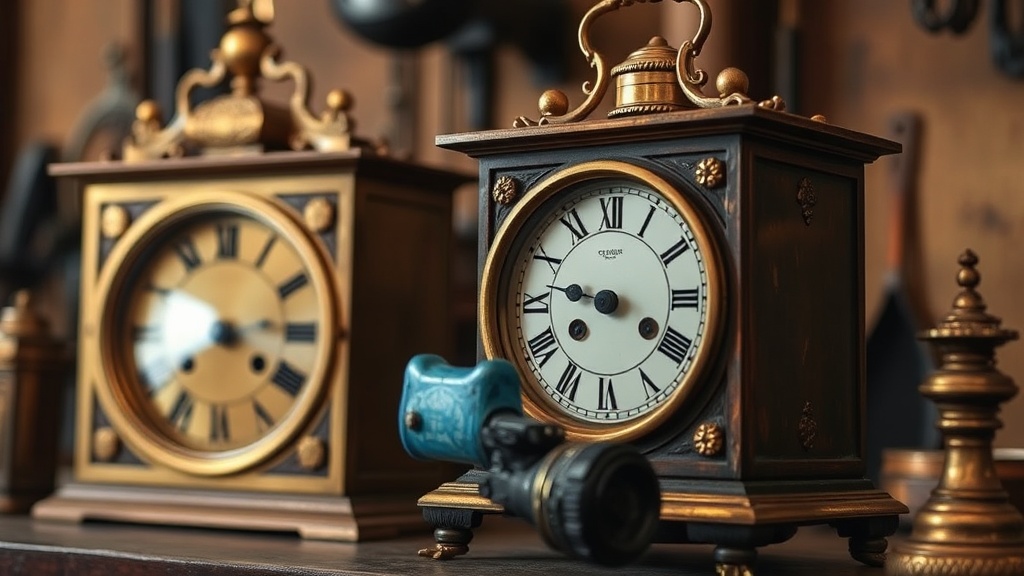
Cleaning Brass Clock Cases Without Damaging the Patina

This guide explains how to clean the brass cases of your antique clocks using non-abrasive methods that preserve the aged patina. You'll learn which substances to avoid, how to handle delicate engravings, and how to distinguish between surface dirt and actual oxidation. The goal is to restore shine without stripping the historical character that gives a timepiece its value.
How Do I Clean Brass Without Stripping the Patina?
The safest way to clean brass without stripping the patina is to use a mild, pH-neutral soap and distilled water rather than harsh chemical polishes. Most antique brass has a layer of oxidation—that beautiful, dark toning—that collectors actually want to keep. If you use an aggressive metal polish like Brasso or Wright's, you'll likely strip that layer away, leaving the metal looking "new" and cheap. A new-looking clock is often a less valuable clock in the eyes of serious collectors.
Start by identifying the type of brass you're dealing with. Is it high-polish gold-toned brass, or is it aged, darkened bronze-toned brass? If it's the latter, your goal isn't to make it shine like a mirror; it's just to remove the grime. A simple solution of warm water and a drop of mild dish soap (like Dawn) is often all you need. Use a soft, lint-free microfiber cloth to wipe away dust and oils. If there's stubborn grime, a soft-bristled toothbrush can help, but be extremely gentle around fine details.
Avoid using any abrasive pads or scouring powders. These will create micro-scratches that catch the light and ruin the smooth surface of the case. If you're working on a high-end piece, like a French mantel clock, the precision of the metalwork is part of its identity. You don't want to be the person who "polished away" the history of a beautiful piece.
The "Do Not" List for Antique Brass
- Never use commercial metal cleaners: Products like Brasso are designed to strip metal to a bright shine, which destroys the aged look.
- Avoid vinegar and lemon juice: These are acidic and can cause pitting or uneven discoloration on the brass surface.
- Don't use heavy pressure: If the grime doesn't come off with a light touch, it might be part of the patina.
- No paper towels: They are surprisingly abrasive and can leave tiny scratches on soft metals.
What Are the Best Materials for Cleaning Antique Clock Cases?
The best materials for cleaning antique brass are soft, non-reactive, and moisture-controlled. You want to remove the surface-level grime while leaving the chemically stable oxidation intact. For most collectors, a dry approach is always safer than a wet one.
I always suggest keeping a kit of specific supplies on hand. You don't need a garage full of chemicals. In fact, the less you use, the better. Here is a quick breakdown of what works and what to keep in your toolkit:
| Material | Use Case | Risk Level |
|---|---|---|
| Microfiber Cloth | Dusting and light wiping | Very Low |
| Distilled Water | Dissolving surface grime | Low (if dried quickly) |
| Soft Toothbrush | Cleaning deep engravings | Medium (use with care) |
| Camel Hair Brush | Removing loose dust | Zero |
If you have a particularly dirty case, you might be tempted to use a specialized cleaner. If you must use a product, look for something specifically labeled for "museum-grade" or "non-abrasive" use. However, most of the time, a dry, soft brush is your best friend. If you're worried about the movement inside the case, remember that moisture is the enemy. If you're cleaning a piece that is highly sensitive to the environment, you should be extra cautious about protecting your pendulum from humidity and moisture-related issues.
One thing to keep in mind: if the brass looks "cloudy," it might not be dirt. It might be a thin layer of lacquer that has aged or cracked. If there is a lacquer coating, no amount of soap and water will clean it. In that case, you're looking at a much more complex restoration project that usually requires a professional. Don't go digging into a lacquer issue with a cloth; you'll just end up with a sticky mess.
How Often Should You Clean an Antique Brass Clock?
You should only clean your antique clock when there is visible dust or surface grime, rather than on a set schedule. Over-cleaning is a common mistake that leads to the gradual degradation of the metal's surface. A clock that sits on a mantle might only need a light dusting once a month, whereas a clock in a high-traffic area might need more attention.
The goal is "maintenance," not "restoration." If you find yourself cleaning the case every week, something is wrong. You might have an environmental issue, like high humidity or dust levels in your home. If you're seeing dark spots that won't come off, don't scrub harder. That's likely the natural patina or even a small area of corrosion. Instead, just wipe the surrounding area to keep it looking tidy. It's much better to have a slightly dull, authentic-looking clock than a shiny, stripped-down one that looks like it was made yesterday.
When you're working on the case, be mindful of the movement. If you're cleaning a clock with an exposed movement or one where the case is easily opened, you need to ensure no liquids or dust enter the internal mechanism. If you're unsure about the stability of the parts, it's always better to ask. I've seen people accidentally cause damage while trying to be helpful. If you're currently working on the internal parts, make sure you aren't making errors during the winding process or handling the movement itself.
A quick tip: always clean the case while the clock is not running, or better yet, when it is fully wound and the pendulum is stationary. This prevents any vibration from shaking loose any cleaning residue into the delicate gears. If you're cleaning a piece with intricate gold leaf or painted details, skip the water entirely and use only a dry, soft brush.
The reality is that most "patina" is actually just a thin layer of oxidation that protects the metal underneath. Think of it like a shield. If you scrub it away, you're exposing the raw brass to the air, which will just cause it to oxidize again—only this time, the reaction might be uneven and look quite ugly. A little bit of age is a sign of authenticity. It's part of the story the clock tells.
If you find a piece of brass that is exceptionally dark or has a greenish tint (verdigris), stop immediately. That is a sign of deeper corrosion, and simple surface cleaning won't fix it. At that point, you're looking at a chemical reaction that might require a professional conservator. It's much better to leave a "dirty" clock alone than to accidentally ruin a valuable antique with a well-intentioned cleaning attempt.
Steps
- 1
Dusting with a Soft Brush
- 2
Using a Damp Microfiber Cloth
- 3
Avoiding Harsh Chemicals
- 4
Polishing Only if Necessary