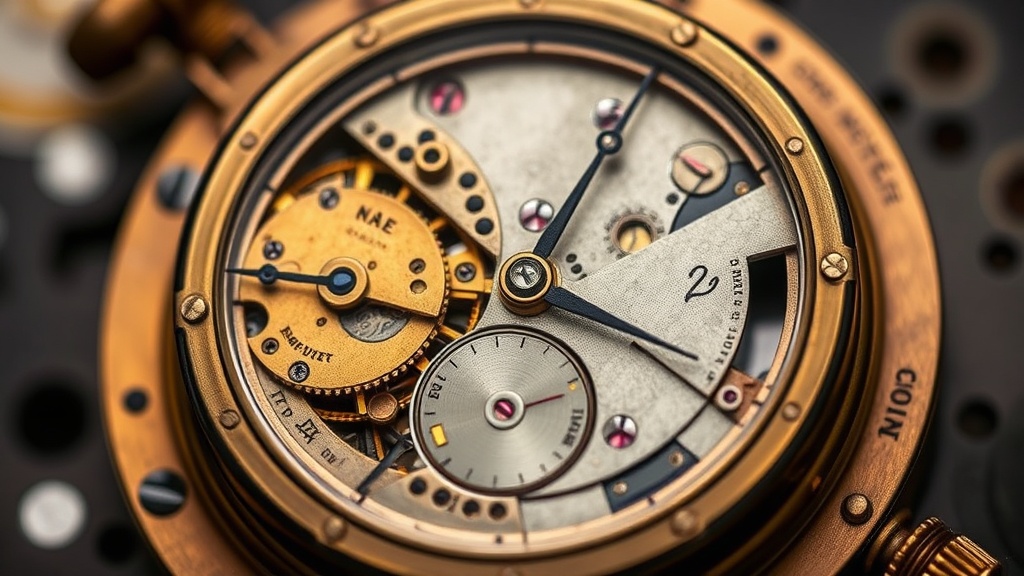
Distinguishing a True Fusee Movement in Antique Timepieces

Is the antique clock you're considering truly equipped with a genuine fusee mechanism?
For collectors and enthusiasts, verifying the authenticity of an antique clock’s internal workings is often as compelling as appreciating its external beauty. The fusee mechanism, an ingenious solution designed to equalize the varying power of a mainspring, represents a significant leap in horological precision. This guide will walk you through the key indicators—both visible and subtle—that help confirm the presence and originality of a fusee in vintage timepieces, providing you with the confidence to make informed decisions and a deeper appreciation for these mechanical marvels.
Understanding the fusee isn't just about technical appreciation; it's about discerning value and historical integrity. Many clocks might *appear* to be fusee-driven, yet only a careful, knowledgeable inspection reveals the truth. We’ll cover what a fusee is, how to spot it, and what common misconceptions or alterations to watch out for.
What Exactly is a Fusee Mechanism, and Why Does it Matter?
At its heart, a fusee is a cone-shaped pulley driven by a coiled chain that unwinds from the mainspring barrel. As the mainspring unwinds, its power decreases. The genius of the fusee lies in its shape: the chain pulls from a progressively wider diameter on the cone as the spring weakens. This increasing leverage perfectly counteracts the diminishing force, delivering a constant torque to the gear train. Think of it as a mechanical equalizer, ensuring consistent timekeeping throughout the mainspring's run time.
This invention, dating back to the 15th century, revolutionized portable timekeeping. Before the fusee, watches and clocks were notoriously inaccurate, speeding up when fully wound and slowing down as the mainspring lost tension. Its development marks a pivotal moment in horological history, making timepieces genuinely practical and precise instruments. So, when you encounter an antique clock claiming to house a fusee, you're looking at a piece of history that embodies centuries of mechanical innovation and a commitment to accuracy that was—and still is—deeply respected by connoisseurs.
The presence of a fusee often indicates a higher quality, more historically significant, and generally more expensive timepiece. It suggests craftsmanship and an attention to detail that lesser clocks might lack. Verifying its authenticity, therefore, becomes paramount for both collectors and those simply seeking a connection to the past. For a deeper dive into the historical context, you might want to explore resources like the