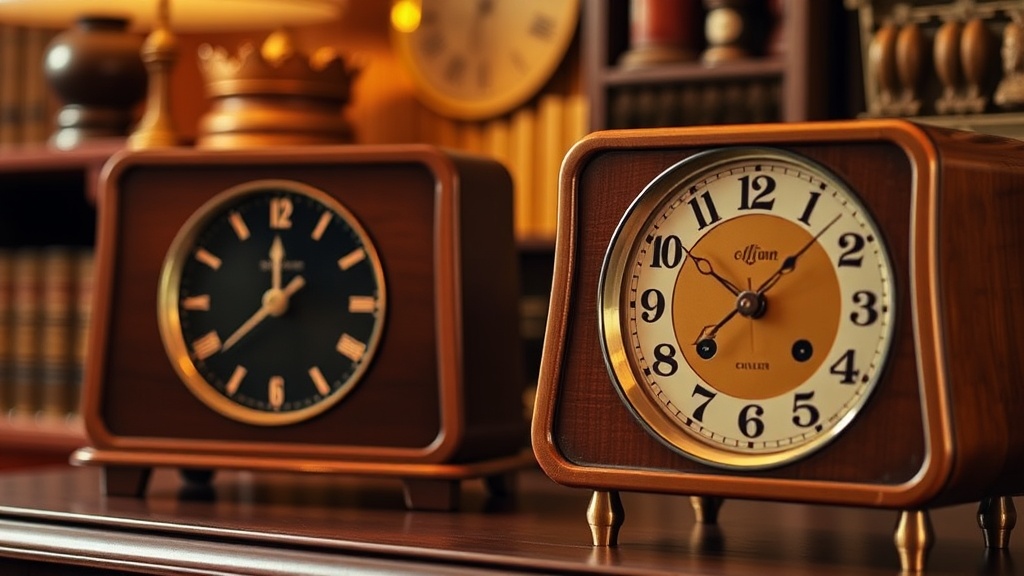
Identifying Authentic Mid-Century Mantel Clocks

A single mechanical clock from the 1950s can often contain more than one hundred individual moving parts, all working in perfect unison to track the passage of time. This post examines the specific markers that distinguish a genuine mid-century modern timepiece from later, lower-quality reproductions. Whether you're looking at a sleek, geometric piece from the Bauhaus influence or a more whimsical Atomic Age design, knowing what to look for ensures you don't overpay for a modern imitation. We'll cover materials, maker marks, and movement types to help you build a collection with integrity.
The mid-century era wasn't just about a change in aesthetic; it was a radical departure from the ornate, heavy wood carvings of the Victorian and Edwardian periods. Instead, collectors saw a shift toward brass, chrome, and high-quality Bakelite. If you're hunting through estate sales or flea markets, you'll notice that these pieces often look much cleaner and simpler than the clocks from the previous century. This simplicity can be deceptive, though—some people mistake 'simple' for 'modern' and overlook a genuine vintage treasure.
What materials define mid-century clock-making?
When you pick up a vintage timepiece from this era, the first thing you should notice is the weight and the texture. While the early 1900s relied heavily on dark mahogany or oak, the mid-century collector should look for a specific palette of metals and plastics. Genuine mid-century pieces often use:
- Brushed Brass: Not the shiny, high-polish gold of later cheap imitations, but a more subtle, matte finish.
- Bakelite and Catalin: These early plastics have a distinct weight and a deep, rich color that modern plastics can't quite replicate.
- Chrome and Aluminum: Used heavily in the 'Atomic Age' styles to reflect the fascination with space and flight.
If a clock feels incredibly light or has a hollow, 'clicky' sound when tapped, it's likely a modern reproduction made from lightweight resins. A real mid-century piece has a certain gravity to it. The materials were chosen for their durability and their ability to catch the light in a room without being overwhelming. Keep an eye out for the patina—real brass will show subtle aging, whereas a modern coating often looks too uniform and perfect.
How do I find the manufacturer's mark?
Identifying the maker is the best way to verify age and quality. Many of the top-tier clockmakers of the 1950s and 60s didn't just leave a name; they left a signature style. You won't always find a large, obvious logo on the front of the clock—that would ruin the minimalist aesthetic. Instead, you'll need to look at the back plate, the underside of the base, or the internal movement itself.
Check the dial for subtle branding. Some high-end makers hid their names within the decorative flourishes of the clock face. If you find a movement inside, look for stamped numbers or names like Westclox or Seth Thomas. These brands were leaders in the industry and often produced pieces that defined the era. You can research specific movements and their historical context through the Library of Congress digital collections or specialized horological databases to see if a specific design pattern matches known historical production runs.
"The beauty of a mid-century clock lies in its ability to look modern even sixty years after its creation. It's a design that doesn't age, provided the movement remains sound."
Don't forget to check the winding mechanism. If the clock is a mechanical wind-up, the winding key or the knob itself should feel substantial. If it's a battery-operated quartz movement, it's likely a later replacement or a modern piece entirely. While many vintage clocks were updated to run on batteries for convenience, a true collector seeks the rhythmic pulse of a mechanical movement.
Can I use a battery in a vintage clock?
This is a common question among new collectors. Many mid-century clocks were originally designed to be mechanical, but many owners eventually swapped the movement for a quartz motor to save time on winding. While this makes the clock easier to maintain, it can lower the value for a serious collector. If you find a clock that looks authentically vintage but runs on a single AA battery, it's a sign that the original mechanical heart has been replaced.
If you're looking for a piece that retains its historical value, prioritize clocks with a functional mechanical movement. You can often find information on how to service these movements through the Smithsonian Institution archives, which often discuss the technological shifts in domestic life during the 20th century. A mechanical movement is a living thing—it requires a bit of care, but it offers a connection to the past that a battery simply cannot provide.
When evaluating a potential purchase, always ask if the clock has been 'converted.' A converted clock isn't a bad thing for a casual home decorator, but for the serious collector, it's a significant detail. A truly vintage piece should have the ability to be wound or, if it's an early electric model, it should run on the specific voltage intended for that era.
As you move through different auction houses or even online marketplaces, remember that the 'look' of an item is only the first step. The weight, the material, and the hidden marks are what tell the real story. A mid-century clock should feel like a piece of functional art, not just a way to keep track of the hour. Whether it's a sleek geometric mantel clock or a heavy brass desk piece, the goal is to find something that survives the test of time through both its design and its build quality.