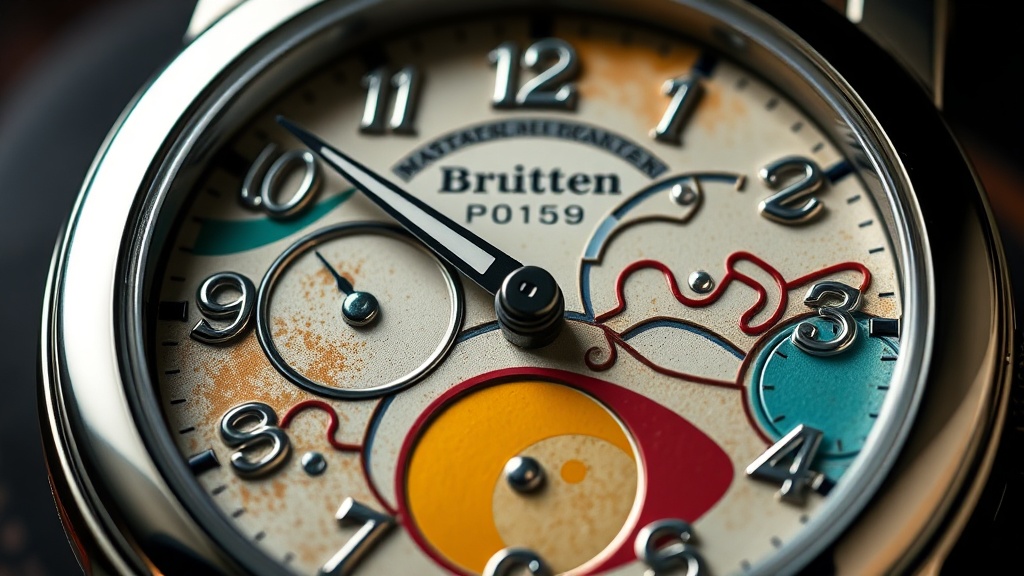
Recognizing Hand-Painted Enamel Dial Details

Have you ever stared at a vintage timepiece and wondered if that delicate floral pattern is a printed decal or a hand-painted masterpiece? Distinguishing between a mass-produced printed dial and a true hand-painted enamel dial is the difference between owning a standard vintage clock and a piece of fine art. This guide breaks down the visual cues, tactile sensations, and technical details you need to identify genuine enamel work.
Enamel dials—specifically grand feu or painted enamel—represent the pinnacle of clockmaking. They aren't just surfaces; they are glass-based art. If you're serious about collecting, you need to know what to look for before you write that check at an auction.
How Can You Identify a Hand-Painted Enamel Dial?
You can identify a hand-painted enamel dial by looking for slight irregularities in the pigment and checking for the characteristic depth of a glass-fired surface. While printed dials aim for perfect uniformity, hand-painted enamel is a human process. It involves applying finely ground glass powder and metallic oxides to a metal base, then firing it in a kiln at extremely high temperatures.
The first thing to look for is the "depth" of the color. If you hold the clock under a bright light or a jeweler's loupe, a printed dial often looks flat. It looks like ink sitting on top of a surface. A real enamel dial, however, has a sense of translucency. The color feels like it is inside the glass, not just sitting on top of it. This is because the pigments are fused into the glass layer during the firing process.
Look closely at the fine lines of the numerals or the decorative flourishes. In a printed dial, the lines are often perfectly identical—which is a dead giveaway of a mechanical printing press. In hand-painted enamel, you might see tiny, almost microscopic variations in the thickness of a line or a slight "bleed" where the pigment met the heat. These aren't flaws; they're the fingerprints of the artist.
One way to test this is the "Reflection Test." Hold the clock at an angle under a single light source. A printed dial will often show a slight texture or a "dot pattern" (similar to a newspaper image) when the light hits it. An enamel dial will show a smooth, continuous, and deep reflection, much like a gemstone. (If you see tiny dots, walk away—it's a print.)
Common Visual Indicators of Quality
When you're inspecting a piece, keep this checklist handy. It helps to categorize what you're seeing into "Mechanical/Printed" vs. "Artisanal/Enamel."
- The Edge of the Numerals: Printed numerals often have a "sharp" edge that looks too perfect. Hand-painted numerals have a soft, organic quality.
- Color Gradation: If a dial has a sunset or a floral gradient, a printed version will show "stepping" or lines between colors. Hand-painted enamel flows seamlessly.
- Surface Texture: Enamel is a glass-like surface. It should be incredibly smooth, but it may have tiny "pits" or "bubbles" (known as pinpricks) that are characteristic of the firing process.
What Is the Difference Between Painted Enamel and Printed Dials?
The primary difference lies in the medium used: hand-painted enamel uses ground glass and metal oxides fired in a kiln, while printed dials use ink or lithographic processes. This distinction affects the longevity, value, and aesthetic depth of the timepiece.
Think of it like the difference between an oil painting and a high-quality photograph. A printed dial is a reproduction of a design. An enamel dial is the design itself. This is why high-end brands like Breguet or Patek Philippe historically used enamel. It isn't just about the look; it's about the permanence of the art.
Here is a quick comparison to help you during your next inspection:
| Feature | Printed/Lithographed Dial | Hand-Painted Enamel Dial |
|---|---|---|
| Material | Ink or pigment on metal/paper | Ground glass/metallic oxides |
| Visual Depth | Flat, opaque, and superficial | Translucent, deep, and luminous |
| Consistency | Perfectly uniform/mechanical | Subtle human variations |
| Prone to fading or peeling | Extremely durable (if not cracked) |
It's worth noting that many "faux" enamel dials exist. These are often just high-quality printed dials with a clear coat to mimic the shine. If you aren't careful, you'll pay a premium for a piece that lacks the actual artistry of real enamel. If you're ever unsure, check the Wikipedia entry on Enamel to understand the chemical process of vitrification—it'll give you a better grasp of the science involved.
If you've already mastered the basics of identifying high-end materials, you might want to look into identifying genuine French mantel clocks, as many of these beautiful enamel pieces are found in French clockmaking traditions.
How Much Does a Hand-Painted Enamel Dial Affect Value?
A hand-painted enamel dial can increase a clock's value by hundreds or even thousands of dollars compared to a standard printed version. Collectors view the dial as the "soul" of the timepiece, and an artisanal dial often marks the clock as a higher-tier production model.
The value isn't just about the aesthetics. It's about the rarity of the skill. There are far fewer people who can successfully fire a perfect enamel dial than there are people who can run a printing press. This scarcity drives the price up. In the world of antique collecting, the "human element" is almost always more valuable than the "mechanical element."
However, there is a catch. While enamel is incredibly durable, it is also brittle. A single drop or a hard impact can cause "hairline cracks" (crazing) across the surface. A cracked enamel dial can actually *decrease* the value of a clock significantly. While a printed dial might just look "worn," a cracked enamel dial looks broken.
When inspecting a piece, look for these specific issues:
- Crazing: Tiny, spiderweb-like cracks across the surface. This usually happens due to thermal shock or impact.
- Chipping: Small pieces of the glass layer missing, often around the edges or near the center hole.
- Discoloration: While enamel is stable, certain metallic oxides can react if the kiln temperature wasn't controlled, leading to "blotches."
If you find a piece with a pristine, uncracked enamel dial, you've found a treasure. Most collectors will pay a massive premium for a "clean" dial because finding intact enamel on a 100-year-old clock is much harder than finding a standard brass or printed dial.
The beauty of these pieces is that they are built to last. Unlike paper dials that yellow or fade in sunlight, a well-cared-for enamel dial will look exactly the same a century from now. It is a permanent form of beauty.
Before you dive into a high-end purchase, I always recommend checking the Library of Congress digital collections or similar archival sites to see examples of historical decorative arts. Seeing how these materials were used in the 18th and 19th centuries will train your eye to recognize the real thing.
Don't be afraid to use a jeweler's loupe. It's the only way to truly see the "grain" of the art. If you're looking at a dial and it looks too "perfectly digital," you're likely looking at a print. If it has a soul, you've found the enamel.