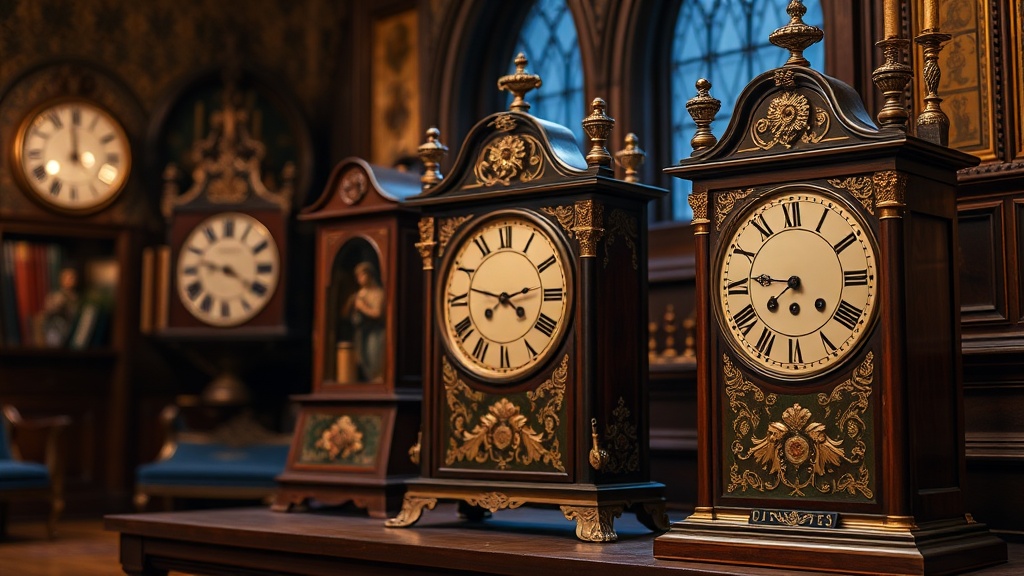
Tracing the Movement of Regency Era Bracket Clocks

A collector in London recently purchased a mahogany bracket clock at an auction, only to realize the movement inside was a much later, mass-produced replacement. The original precision of the Regency era had been lost to a cheaper, modern mechanism. This post looks at the specific mechanical signatures of Regency era bracket clocks, how to identify authentic movements, and why understanding the transition from hand-forged to industrial parts is vital for any serious horologist.
The Regency era (roughly 1811–1820, though often extending through the 1830s) represents a high-water mark for British clockmaking. It’s a period where the elegance of the Georgian era met the rising industrial capabilities of the early 19th century. If you're looking at a bracket clock, you're not just looking at a timekeeper; you're looking at a piece of engineering history that sits right on the edge of the Industrial Revolution.
What Defines a Regency Era Bracket Clock Movement?
A true Regency movement is characterized by hand-finished brass components and a heavy, high-quality steel escapement. During this era, the transition from purely hand-crafted parts to more standardized production was underway, but the "soul" of the movement remained artisanal. You’ll often see the use of a recoil escapement or an early deadbeat escapement, depending on the specific maker and the clock's intended precision.
Most high-end bracket clocks from this period used a brass plate construction. The plates are thick, sturdy, and often show signs of hand-filing around the screw holes. Unlike modern clocks that use thin, stamped metal, a Regency movement feels substantial. It has a certain weight to it that tells you the metal was intended to last centuries, not decades.
One thing to look for is the quality of the teeth on the gears (the wheels). In a high-quality Regency piece, the teeth are often hand-cut or finished with a high degree of precision. If you see perfectly uniform, machine-stamped teeth, you might be looking at a later Victorian replacement or a much newer reproduction. It’s a subtle distinction, but it matters if you’re valuing the piece for its historical accuracy.
The pendulum is another giveaway. While the pendulum itself is often replaced during cleaning, the original suspension spring should be of a high-quality tempered steel. If the spring looks flimsy or too thin, it's a red flag. You can read more about the technical aspects of pendulum physics and historical oscillations on the Wikipedia page for pendulum clocks to get a better sense of the mechanics involved.
The Maker's Mark and Signature
In the Regency period, the maker's name was a point of pride. You might find a name engraved on the back plate or the dial. Names like John Kane or Benjamin Lewis carry significant weight among collectors. However, don't assume a name means authenticity—forgers and later makers often copied famous names to increase the value of their work.
Always check the signature against known records. A genuine movement will have a consistent style of engraving that matches the era's tools. If the engraving looks too sharp or too "perfectly" modern, proceed with caution. It’s often a sign of a later "marriage" where a vintage case was paired with a newer, less impressive movement.
How Can You Spot a Replacement Movement?
You can identify a replacement movement by looking for inconsistencies in the metal's patina and the precision of the assembly. A replacement is often a "tell-tale" sign of a clock that was repaired during a period of scarcity or by someone using whatever parts were available. This is common in clocks that were heavily used in the late 19th century.
Here are the three most common signs of a non-original movement:
- Screw Discrepancies: If the screws holding the plates together are shiny, modern brass or stainless steel, the movement has been tamered with. Original screws should have a darkened, aged patina.
- Plate Thickness: Modern movements are often much thinner and lighter. A Regency movement should feel heavy and "clunky" in a way that feels intentional.
- The Escapement Style: If you see a modern quartz or battery-operated module tucked into the back of a mahogany case, the clock has been "converted." This is a tragedy for collectors, but it happens frequently in the vintage market.
It’s worth noting that even a high-quality replacement doesn't necessarily mean the clock is worthless, but it does change the valuation significantly. For those focused on historical preservation, a replacement is a loss of much of the item's character. If you're worried about the environmental impact on your clock's internal parts, you should also look into protecting your pendulum from humidity, as moisture is the enemy of even the best brass movements.
The transition from the Regency to the Victorian era saw a massive shift toward mass production. This is where the "old world" charm starts to fade into "industrial" efficiency. A Regency clock is the last gasp of the true artisan before the machine took over entirely.
Why Does the Material Matter for Long-Term Value?
Material composition determines both the durability of the clock and its eventual resale value. In the Regency era, the use of high-grade brass and steel was standard, which is why these pieces still function today. If a movement uses inferior alloys or thinner-gauge metals, it won't stand the test of time—or the test of a collector's scrutiny.
The relationship between the case and the movement is also vital. A mahogany or walnut case was designed specifically to house a certain size and weight of movement. If the movement feels "loose" or doesn't fit the proportions of the case perfectly, it’s a sign that the clock is a "marriage." A marriage is a term used when a high-quality case is paired with a different, often lower-quality, movement.
| Feature | Authentic Regency Movement | Later/Replacement Movement |
|---|---|---|
| Metal Finish | Hand-polished, aged patina | Uniform, bright, or machine-finished |
| Screw Type | Blued steel or aged brass | Modern, shiny, or standardized |
| Complexity | High (hand-filed details) | Lower (stamped or mass-produced) |
| Weight | Substantial and heavy | Lighter and more compact |
When you're out at an estate sale or an auction, don't just look at the exterior. The exterior is the "face," but the movement is the "heart." If the heart is a modern imitation, the value of the entire piece drops. This is a hard truth for many new collectors to swallow, but it's one you'll learn quickly if you stay in this hobby.
The movement's ability to maintain a steady beat is also a sign of its quality. A well-maintained Regency movement should have a rhythmic, consistent tick. If it sounds erratic or "fluttery," the escapement or the gear teeth might be worn. This isn't just a mechanical issue; it's a sign of the piece's physical health.
If you're looking for deeper technical specifications on how these gears were originally cut, the Library of Congress often holds historical patent documents and technical drawings that can provide a glimpse into the engineering standards of the early 19th century. These documents are a goldmine for anyone trying to verify the era of a specific mechanical design.
One thing to keep in mind: even the best movements need maintenance. A Regency clock is a living machine. It requires regular oiling and adjustment. If you find a piece that has been sitting untouched for decades, the oils may have turned into a sticky resin. This can actually damage the brass plates if you try to force the movement to run without a professional cleaning.
Don't be afraid to use a loupe. A simple 10x jeweler's loupe can reveal more about a clock than a dozen photos. Look at the edges of the brass plates. Look at the way the screws sit. These small details tell the real story of the clock's origin. They tell you if you're holding a piece of history or just a very pretty, hollow shell.