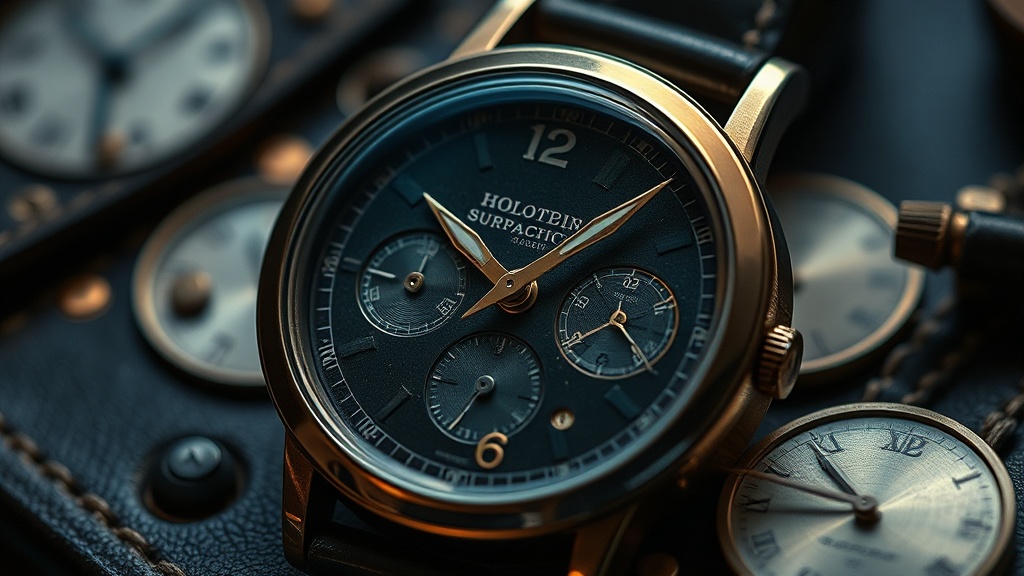
Rare Horological Wonders Found in English Countryside Auctions

The Regency Carriage Clock
The Provincial Bracket Clock
The Vernacular Longcase Clock
Many collectors assume that the finest horological pieces are only found in high-end London auction houses or prestigious galleries. That's a mistake. The real treasures—the ones with unpolished histories and untouched mechanical integrity—often surface in small-town English countryside auctions where the competition is thinner and the prices are far more reasonable. This post examines the specific types of rare timepieces currently surfacing in rural UK auctions, from provincial bracket clocks to rare marine chronometers, and why these regional sales offer a distinct advantage for the serious collector.
What Makes English Countryside Auctions Special?
English countryside auctions offer a higher concentration of uncatalogued, "sleepers" than metropolitan auctions do. In a city, auctioneers are hyper-aware of market trends and will price an item based on its immediate resale value. In a rural setting, a clock might be listed simply as "an antique longcase clock" without any mention of its maker or movement complexity. This lack of granular detail is where the opportunity lies.
You'll find that these sales often involve estate liquidations from local families who have held onto pieces for generations. These items haven't been "flipped" or overly restored by dealers. They are often in their original, albeit dusty, state. For a collector, this is a goldmine because you're getting the raw material before a professional has touched it. (And let's be honest, most modern "restorations" actually strip away the character of a piece.)
The competition is also much more localized. You aren't competing against global bidding wars from collectors in Hong Kong or New York. Instead, you're dealing with local enthusiasts or even estate executors who just want the item gone. It's a much more relaxed environment for the discerning eye.
What Kind of Rare Clocks Should You Look For?
You should focus on finding provincial bracket clocks, rare regulator clocks, and high-quality domestic longcase clocks. These categories often represent the peak of English craftsmanship outside of the major London workshops. While the London-made pieces get all the glory, the provincial makers often produced incredibly sturdy, highly functional pieces that have survived much better due to their robust construction.
Here are three specific types of timepieces that frequently appear in these rural sales:
- Provincial Bracket Clocks: Often made by regional masters, these are smaller, elegant pieces that were once common in gentleman's studies.
- Regulator Clocks: These are precision-focused instruments used as the standard for timekeeping in a household. They are often much more mechanically complex than standard mantel clocks.
- English Longcase Clocks: These are the heavyweights of the collection. Look for those with original weights and pendulums, as many have been lost over the decades.
If you're interested in the mechanics of these larger pieces, it's worth looking into the history of grandfather clocks to understand how the movement and the case evolved together. Understanding that relationship helps you spot a mismatched or poorly repaired piece from a mile away.
It's also worth noting that many of these clocks feature incredibly intricate movements. If you see a clock with an exposed movement, you might be looking at a piece that shares a lineage with the evolution of the skeleton clock. These pieces are much harder to find in a "natural" state because they are so delicate.
| Clock Type | Typical Material | Key Feature to Watch For | Complexity Level |
|---|---|---|---|
| Bracket Clock | Mahogany or Walnut | Original brass dial | Medium |
| Longcase Clock | Oak or Cherry | Original pendulum | High |
| Regulator | Mahogany | Precision escapement | Very High |
How Much Does a Rare English Clock Cost?
The cost of a rare English clock varies wildly based on the maker, the movement, and the condition of the case, but you can typically find high-quality pieces in rural auctions starting from £500 up to £5,000.
The catch? You have to be willing to do your own research. If you see a clock that looks unremarkable, don't dismiss it. A clock that looks like a standard "old clock" might actually have a movement by a master like Thomas Tompion or George Graham hidden inside a plain case. This is why reading the catalog—and even more importantly, reading the descriptions of the movements—is so vital.
When bidding, remember that the "value" is often tied to the mechanical integrity. A clock with a beautiful case but a broken or non-original movement will never hold its value as well as a piece with a documented, working movement. If you're worried about maintenance, you can always look into keeping your clock in rhythm once you've secured the win.
Worth noting is the price of brass and wood in the current market. High-quality mahogany and brass-heavy movements are increasingly expensive to replicate. This means that an original, unpolished English piece is a much better long-term investment than a modern reproduction. The patina on an old English clock isn't just "dirt"—it's history. Don't let a dealer talk you into a "cleaning" that actually ruins the value.
The Importance of the Maker's Mark
The most important thing to look for is the maker's mark, which is often found on the backplate of the movement. In rural auctions, the cataloger might simply write "English Bracket Clock." This is your cue to look closer. If you can view the item in person or request a high-resolution photo of the movement, do it. A name like John Hadley or even a lesser-known regional maker can change the price by hundreds of pounds.
If the maker's name is missing, look at the style of the dial and the shape of the case. These are the "fingerprints" of the era. A certain type of scrolled bracket or a specific style of brass engraving can tell you a lot about the clock's origin. For more information on the technical aspects of these designs, the Wikipedia page on clock makers provides a solid foundation for identifying different eras and styles.
Sometimes, the most valuable part of the clock isn't the clock itself. I've seen cases where the wooden housing is a masterpiece of joinery, even if the movement inside is a standard, mass-produced piece. In the world of collecting, the case is just as important as the gears. It's the "body" that carries the "soul" of the machine.
It's a bit of a gamble, sure. But that's the thrill of the hunt. You aren't just buying an object; you're buying a piece of mechanical history that has survived the passage of time in a quiet English village. That's much more interesting than buying a pristine, cataloged piece from a dealer in a city. The history is still there, waiting to be discovered.